Last updated: 16 May 2026 · Written by Lucy Cameron, 15+ trips to Fiji since 2017
This is the Fiji travel guide we wish we had on our first trip — a practical planner that answers the big questions in the order you actually face them. We have spent more than 90 nights in Fiji across fifteen visits, and what follows is the short version of everything we have learned.
Key Takeaways
- The dry season (May–October) is the easiest time to visit — drier, less humid, fewer cyclones. Peak prices hit July and August school holidays.
- Most visitors fly into Nadi (NAN), transfer to either the Mamanuca or Yasawa Islands, or drive the Coral Coast. The Yasawa Flyer is the workhorse boat between the western island groups.
- You will pay FJD 25–45 (USD 11–20) per main meal at a resort, FJD 8–18 at a local eatery. Budget hostels start at FJD 35/night dorm; overwater bures top FJD 4,000+.
- Most nationalities get a visa on arrival, free, valid for 4 months — but always check the official Fiji Immigration site before flying.
- A first trip works best at 7–10 nights: 2 in Denarau / Coral Coast, 4–5 on an outer island, 1–2 to decompress before flying home.
When to Visit Fiji
The dry season — May to October
This is the window almost every Fiji guide pushes you toward, and we agree — but for boring reasons more than dramatic ones. Trade winds keep daytime humidity manageable, rain is shorter and more isolated, and the cyclone risk drops to near zero. We have seen entire weeks pass without losing a single afternoon to weather.
The trade-off is price and crowds. July and August are peak — Australian and New Zealand school holidays both fall in this window, and the family-friendly resorts on Denarau and the Coral Coast fill up months ahead. If you can swing May, early June, or late September, you get nearly the same weather at 15–25% lower nightly rates.
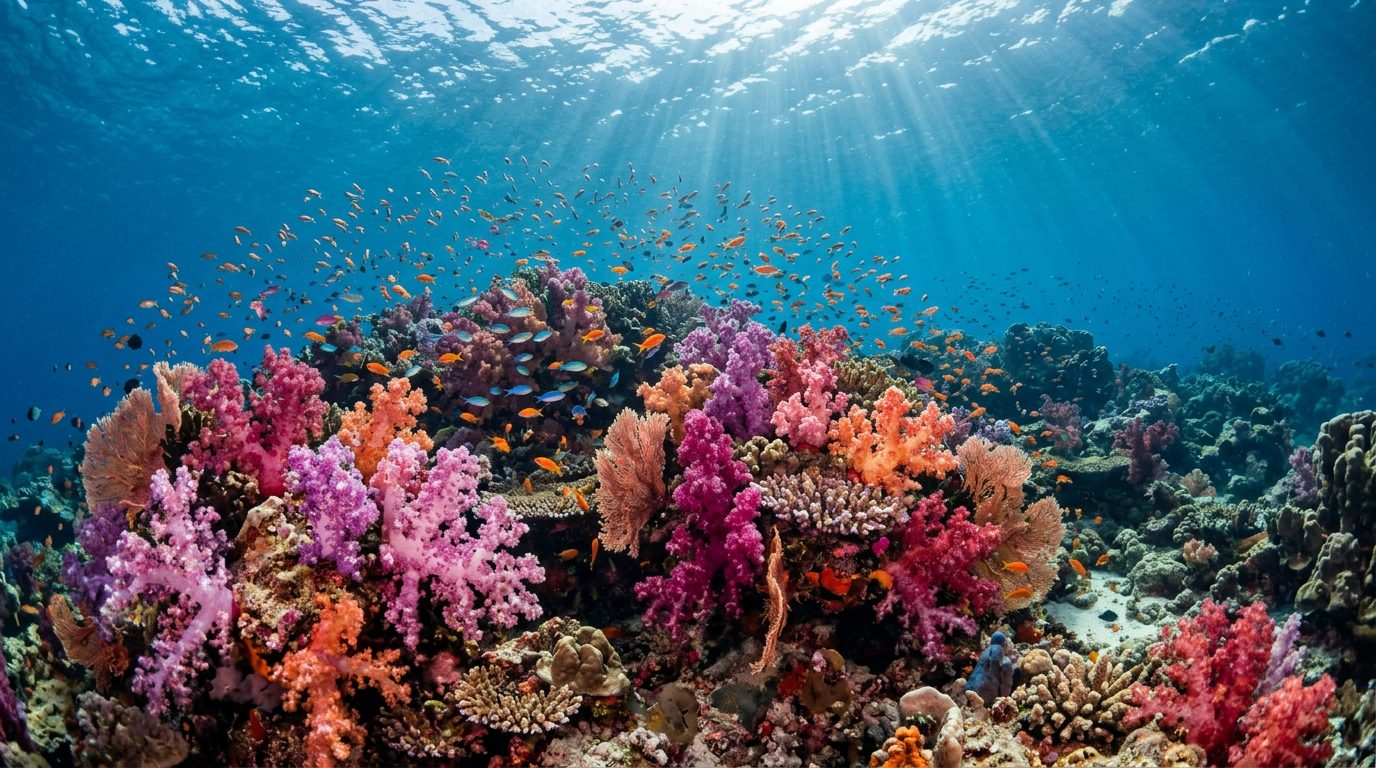
For diving, water visibility is generally best from July through October. Manta ray season in the Yasawas peaks May–October, with the channel between Naviti and Drawaqa offering some of the most reliable manta encounters in the South Pacific.
The wet season — November to April
The wet season gets a worse reputation than it deserves. Rain in Fiji tends to fall in short, intense bursts — often early morning or late afternoon — and the skies clear quickly. We have had some of our best diving and best Coral Coast snorkelling trips in February and March, with nightly resort rates 25–40% below July prices.
The real risk is cyclones. The official cyclone season runs 1 November to 30 April, with the highest probability in January and February. A direct hit is rare for any specific resort, but flight disruption is a real possibility, so we always recommend cyclone-season travellers add comprehensive insurance with named-storm cover.
If you are deciding between months, our deeper guide on the best time to visit Fiji breaks the year down month by month, with snorkel visibility, rain days, and rough peak-season pricing for each.
What “shoulder season” actually looks like
April and October are the two months we recommend most often. April catches the tail of the wet season — typically gorgeous, with a small cyclone-risk buffer — and prices are still in the lower band. October catches the start of school holidays in the southern hemisphere but is dry, breezy and gentle on the budget mid-month.
For honeymoon trips, we lean toward late May to mid-June — peak weather, slightly off-peak prices, and the major overwater-bure resorts haven’t yet bumped to school-holiday rates.
Rain charts and trade-wind direction matter less than you might think. What we have noticed over fifteen trips: the eastern side of any island is wetter than the western, and the Coral Coast (south side of Viti Levu) is the driest area of mainland Fiji year-round.
Getting to Fiji
Flights and the Nadi gateway
Nearly every international visitor lands at Nadi International Airport (NAN) on the western edge of Viti Levu. Fiji Airways is the flag carrier and offers direct routes from Auckland, Sydney, Brisbane, Melbourne, Los Angeles, San Francisco, Honolulu, Hong Kong and Singapore. Qantas, Virgin Australia, Air New Zealand, and Jetstar share the Tasman routes.
Flight time from Los Angeles is roughly 11 hours; from Sydney 4 hours; from Auckland 3. Most US-bound itineraries cross the International Date Line, so you arrive a calendar day later than you might expect — plan onward connections accordingly.
Cheaper return fares pop up in the lower end of February and across late September into early October. We have seen LAX–NAN returns in economy as low as USD 950 booked four months ahead, and as high as USD 1,800 in peak July.
Suva (the alternative airport) and inter-island connections
Nausori Airport (SUV) serves Suva and a handful of regional routes to Tonga, Samoa and Tuvalu. It is rarely the right entry point for a leisure trip, but if your itinerary tilts heavily toward Vanua Levu, Taveuni or eastern Viti Levu, flying into Suva on a regional carrier can save a long drive across the main island.
Inter-island flights are run by Fiji Link (a Fiji Airways subsidiary) on small turboprops. Routes connect Nadi or Suva to Taveuni, Savusavu, Labasa, Kadavu, and the Yasawas (Mana Island airstrip). Bookings are not always available on the main Fiji Airways site — try the Fiji Link direct page if a route shows as sold out.
For everything else, you are travelling by boat. The Yasawa Flyer is the spine of the western island system — we explain it in detail in the next section.
The arrivals routine at Nadi
Expect to clear immigration in 20–40 minutes on a typical flight. Customs is light unless you arrive with sealed dive gear, in which case have your wash-down certificate ready (Fiji takes biosecurity seriously). Free wi-fi works inside the terminal and is usable for booking confirmations.
Most major resorts arrange a transfer by minibus or chauffeured car to Denarau (20 minutes) or the Coral Coast (90 minutes). If you are picking up your own car, the rental desks are immediately past customs — but verify your booking by email before flying, because walk-ins during peak weeks are routinely turned away.
The small Bula Lounge bar opposite the international gates is open 24 hours and is genuinely the right move if you arrive on a red-eye and have a few hours to kill before your onward Yasawa Flyer departure. FJD 18 for the first beer.
Where to Go: Picking Your Islands
Viti Levu — the main island
Viti Levu holds Nadi, Suva, the Coral Coast and Denarau Island — basically all of mainland Fiji. Most first-time visitors spend one to three nights here, either at the start or end of the trip, to dodge a same-day inbound transfer or to decompress before the long-haul flight home.
The Coral Coast — the southern stretch from Sigatoka to Pacific Harbour — is where you find the more affordable family resorts, Sigatoka Sand Dunes National Park, and shore-snorkelling spots that rival anything in the outer islands at a fraction of the transfer cost. We detail the area in our Coral Coast guide.
Denarau Island — technically a man-made causeway-connected resort enclave — is the easy-mode landing pad. Six chain-brand resorts, a marina, restaurants and the departure point for every major outer-island boat. Convenient but feels less like Fiji and more like a resort precinct.
The Mamanuca Islands
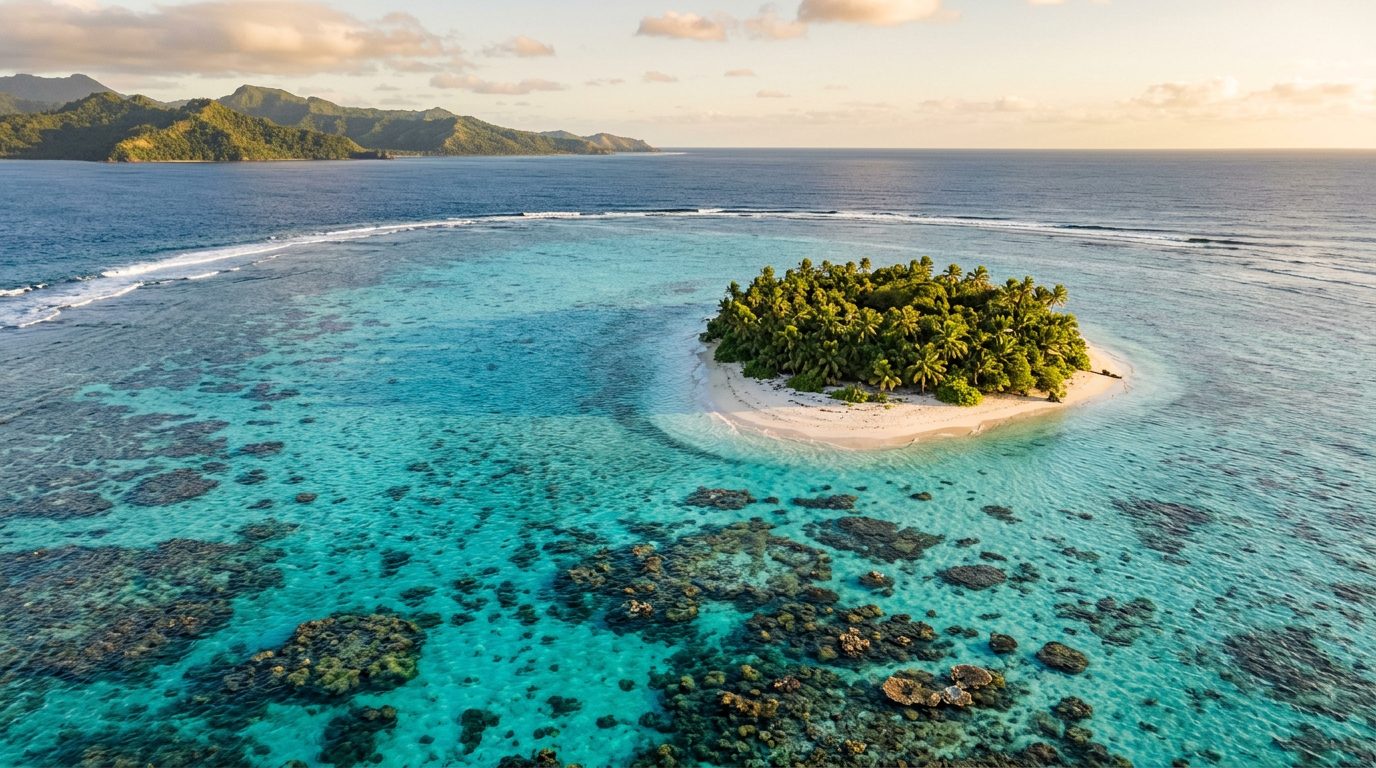
The Mamanucas sit closest to Nadi — 20 to 60 minutes by boat from Port Denarau. This is the chain you see in the brochures: tiny palm-rimmed sandbars (Castaway Island, the original Tom Hanks “Cast Away” island), reef-fringed resorts, day-trip pontoons (Cloud 9, South Sea Cruises) and the densest cluster of overwater bures in the country.
It is the right choice if you have 4–6 nights, want short transfer times, and prefer the variety of activity options that come with a busier resort scene. Honeymooners trend here for the overwater bungalow inventory — see our Mamanuca Islands guide for the resort-by-resort detail.
Notable Mamanuca resorts we have stayed at and rate: Likuliku Lagoon (overwater, adults-only), Vomo Island (family-luxury), Castaway Island (family-mid), Tokoriki Island (adults-only mid-luxury), Malolo Island Resort (family-mid). All are 30–60 minutes from Nadi by Malolo Cat or resort transfer.
The Yasawa Islands
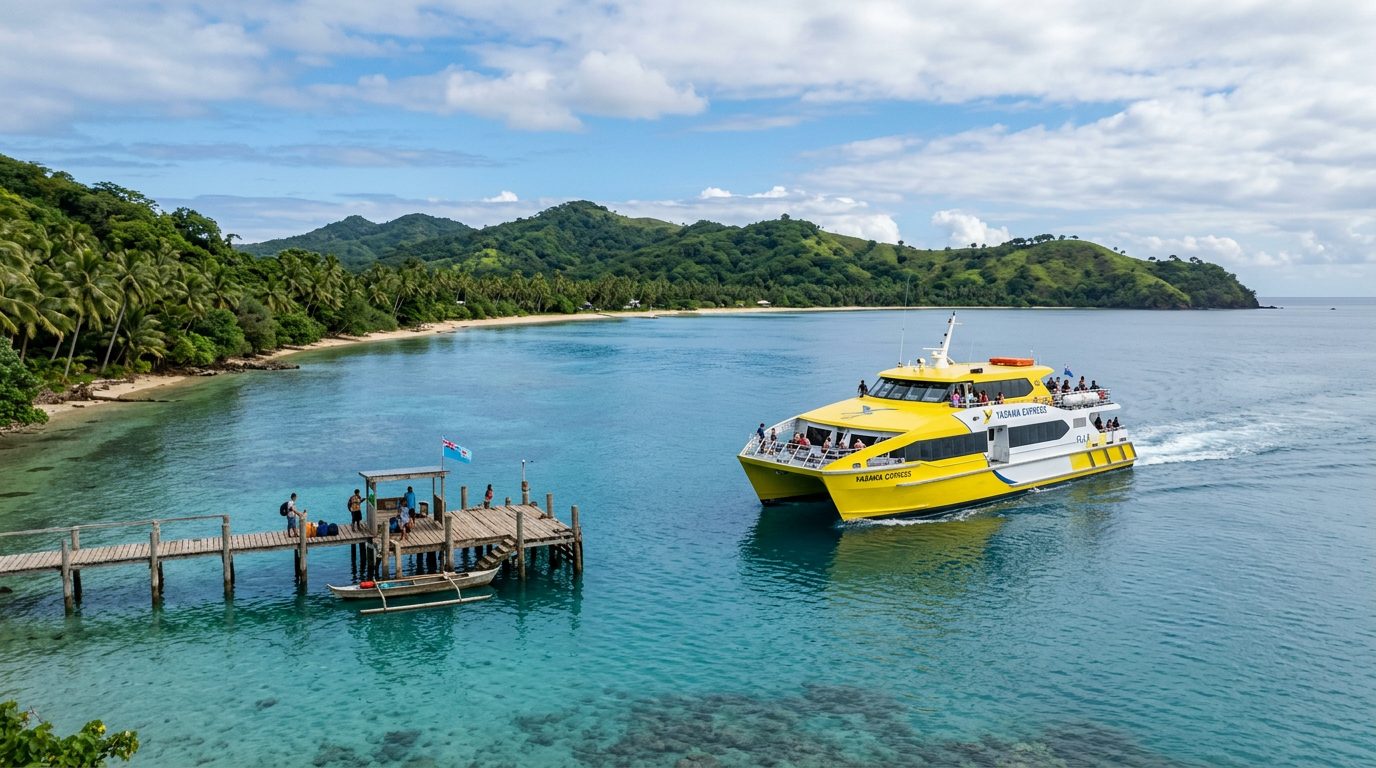
North of the Mamanucas, the Yasawas stretch in a 90-kilometre chain of long, narrow volcanic islands. Backpacker hostels share these islands with luxury lodges, and the entire chain is served by a single boat — the Yasawa Flyer (operated by Awesome Adventures Fiji) running daily from Port Denarau.
This is our favourite region of Fiji for island-hopping, and the only place where the multi-stop “Bula Pass” makes economic sense. A 7-day Bula Pass is roughly FJD 595 (USD 270) and lets you hop on and off the Yasawa Flyer between any resorts in the chain. Pair it with island accommodation booked through Awesome’s resort partners.
The Yasawas are the right choice for travellers who want to slow down, see more than one island, and don’t mind smaller resort scale. Read our dedicated Yasawa Islands guide for which island to land on for what kind of trip.
Vanua Levu, Taveuni and the further-flung
Vanua Levu is Fiji’s second island — Savusavu is the main town, a deepwater yacht harbour and the gateway to some of the country’s best macro diving. Taveuni, the “Garden Island”, is across the Somosomo Strait — famed for the Rainbow Reef, the Great White Wall dive site, and the Bouma waterfalls.
These islands need at least 5 nights to feel worth the transfer effort. Most visitors fly into Savusavu or Taveuni from Nadi on Fiji Link (FJD 280–420 one-way) rather than try the long ferry. We recommend them on a second visit, or for travellers who want more of a frontier-tropics feel and less of a resort-strip feel.
Kadavu (Astrolabe Reef), Beqa Lagoon (the famous shark dive), and Lakeba are progressively more remote and reward visitors who already have a sense of Fiji from a first trip. For most readers planning trip #1, we would steer you toward Viti Levu plus one of the Mamanuca or Yasawa chains.
Where to Stay
The price tiers
Fiji accommodation breaks into roughly four bands, and knowing where you sit on this spectrum is the single biggest planning decision:
| Tier | FJD / night (typical) | USD / night | Example properties |
|---|---|---|---|
| Backpacker | FJD 35–120 | USD 15–55 | Mantaray Island, Barefoot Manta, Bamboo Backpackers |
| Mid-range | FJD 280–650 | USD 125–290 | Mango Bay, Bedarra Beach Inn, Mantaray Resort (private bure) |
| Upper-mid / family-luxury | FJD 700–1,400 | USD 310–620 | Castaway Island, Mana Island Resort, Outrigger Coral Coast |
| Luxury / overwater | FJD 1,800–4,500+ | USD 800–2,000+ | Likuliku Lagoon, Six Senses Fiji, Turtle Island, Vomo |
These are 2026 rates we have observed across high and low season; specific resorts swing 25–40% between July and February. Always check a resort’s own site against major OTA prices — direct rates frequently include free transfers, meals, or a kids-stay-free clause that the OTAs hide behind their “best price guarantee” wording.
For deep-dive reviews and ranked lists, see our Fiji resorts hub, which sorts properties by style, island, and budget tier.
Meal plans — what to actually book
Outer-island resorts almost always quote rates with a meal plan attached. Common options:
- EP (European Plan) — room only, you pay per meal. Available only on Viti Levu where outside restaurants exist.
- BB (Bed & Breakfast) — breakfast included, lunch/dinner à la carte. Common at Coral Coast resorts.
- HB (Half Board) — breakfast + dinner. Common on the Mamanucas. We usually book this and add lunch à la carte if needed.
- FB (Full Board) — three meals included. Standard on Yasawa backpacker islands and luxury all-inclusives.
- AI (All-Inclusive) — meals + most drinks + selected activities. Rare in Fiji, common at Six Senses, Castaway Family Plan, and a handful of Yasawa lodges.
On a remote island with no village within walking distance, Half Board or Full Board is almost always cheaper than à la carte. On the Coral Coast, where you can walk or drive to local eateries, EP or BB is fine.
Honeymoon, family, budget — three quick steers
For honeymoons, the easy answer is “an overwater bure on the Mamanucas” — Likuliku Lagoon if you want adults-only with a swim-up villa, Tokoriki Island Resort if you want adults-only without the overwater price tag. We work through the full shortlist in our Fiji honeymoon guide.
For families, Outrigger Fiji Beach Resort and Shangri-La’s Yanuca Island on the Coral Coast both run excellent kids clubs and have shallow swim beaches. Castaway Island Resort is the standout outer-island family choice. See our family travel guide for the long list.
For backpackers, the Bula Pass + a string of Yasawa lodges is the canonical route. Budget FJD 80–150 per night for dorm beds plus full board, and FJD 595 for the 7-day pass. Mantaray Island, Barefoot Manta, and Naqalia Lodge are perennial favourites.
Things to Do in Fiji
Water-based activities (the headline acts)
Snorkelling is the activity Fiji is built for. House reefs at most outer-island resorts give you reasonable visibility 100 metres off the beach, with parrotfish, soft corals, and small reef sharks routine. We rate the snorkelling at Mantaray Island (Yasawas), the Castaway Island house reef, and Natadola Beach (Coral Coast) as among the best shore-access spots in the country. Our dedicated Fiji snorkeling guide goes deeper.
Scuba diving punches above its weight. The Rainbow Reef (Taveuni / Vanua Levu) is the classic, but the Beqa Lagoon shark dive is the one that hooks most divers. Manta Channel between Naviti and Drawaqa in the Yasawas runs May–October and is one of our most reliable manta encounters in the South Pacific. See our Fiji diving guide for site-by-site detail.
Surfing is a niche-but-elite scene. Cloudbreak (off Tavarua) is one of the world’s most famous left-hand reef breaks. Frigates Pass, Restaurants, and Wilkes Pass are the other big-name reef setups. All are boat-access only, and most require a fly-in surf-camp arrangement.
Land-based activities
Hiking is underrated in Fiji. The Bouma Falls trail on Taveuni is a three-tier waterfall walk through tropical rainforest. Sigatoka Sand Dunes National Park is a coastal hike past archaeological sites and unusual coastal dune ecology. The Lavena Coastal Walk on Taveuni stretches across five kilometres of rainforest-meets-beach trail.
Ziplining at Vatuvara Forest Park (near Nadi) and Pacific Harbour are the two main operations. They are tourist-grade rather than adventure-grade, but a fun half-day if you have kids or are based on the Coral Coast for a couple of days.
Visiting a traditional Fijian village is a humbling and worthwhile half-day. Bring a sulu (sarong) to wear on entry, take off your hat, and contribute a small gift of yaqona (kava root) — most resort-arranged visits include this. The kava ceremony you will be invited into is real, not a tourist re-enactment.
Culture, food and the kava bowl
Kava is Fiji’s national drink — a mildly sedating root infusion, served in coconut-shell bowls from a communal tanoa. The taste is earthy and the lip-tingle is unfamiliar; the cultural significance is enormous. Accept the bowl when offered, clap once before and after, and don’t pretend to drink it (the host will know).
Lovo is the underground earth-oven feast — meat, fish and root vegetables wrapped in banana leaves and slow-cooked over hot stones in a pit. Many resorts run a weekly lovo night, usually paired with a meke (traditional song-and-dance performance). It is one of the most authentic resort cultural offerings — go to the early seating if possible, when the host families do the cooking demonstration.
Everyday Fijian food leans on cassava, taro, fish curries and roti — strongly influenced by the Indo-Fijian community that makes up close to 40% of the population. Suva’s market is the most interesting culinary stop on Viti Levu; Nadi’s roti shops along the main road are reliably good for FJD 6–10 lunches.
Money, Visas and the Practical Stuff
Currency, cards and ATMs
The currency is the Fiji Dollar (FJD). The exchange rate sits roughly at FJD 1 = USD 0.44 / AUD 0.69 / NZD 0.74 (mid-2026 — verify before travelling). Resort-bar pricing in FJD is generally fair compared to equivalent Pacific destinations; bottled water at FJD 3, a beer at FJD 9–14, a cocktail at FJD 16–24.
ATMs are common in Nadi, Suva, Sigatoka, Savusavu and Labasa. They are almost non-existent on outer islands — Mamanuca and Yasawa resorts run on signed-charge accounts settled at checkout. Always bring at least FJD 200 in cash if you are heading to an outer island, for tips, village contributions, and small-stall purchases.
Visa and Mastercard are accepted at most resorts and larger restaurants. American Express acceptance is patchy. For a full breakdown of fees, exchange tricks, and which cards to bring, see our Fiji currency guide.
Visa, entry and the SmartGate question
For most passport holders — US, UK, EU, Australia, New Zealand, Canada, Japan and 100+ others — Fiji grants a visa-free entry for up to four months, free, processed at arrival. Your passport must have at least six months validity from your planned departure date.
You will be asked for a return ticket on arrival; have it ready in your email or on a printout. A few border officers ask for accommodation details — a booking confirmation is enough. We have never been asked for proof of funds on entry, but the rule is technically on the books, so don’t be surprised if it comes up.
For the current list of visa-exempt countries and any temporary changes, the Department of Immigration is the authoritative source. We cover the full procedure including extensions and digital-nomad-style stays in our Fiji visa guide.
Health, safety and what to pack
Fiji has no compulsory vaccinations for visitors from most countries. The standard travel-medicine advice is hepatitis A and typhoid as baseline, plus boosters on whatever your home schedule covers. Dengue fever is a real but seasonal risk — DEET-based repellent is a sensible addition for any wet-season trip.
Tap water in Nadi, Suva and major resorts is generally treated and safe. On outer islands, follow the resort’s advice — many have their own desalination or rainwater systems and the tap is fine, but a few do still recommend bottled.
For packing, the short version: lightweight breathable clothing, one warmer layer for evening boat rides, a sulu / sarong for village visits, reef-safe sunscreen (mandatory at some resorts), a snorkel mask if you have one you trust, and a small dry bag for boat transfers. Our Fiji packing list goes through it in full.
Building Your Fiji Itinerary
5 days — the short trip
Five days is enough for a single-island stay. Our usual recommendation: fly in late on Day 1, transfer straight to a Mamanuca resort (Castaway, Tokoriki or Malolo Island Resort), spend Days 2–4 swimming, diving or doing one half-day island-hop, and fly out on Day 5. Skip the Yasawas — the transfer time eats too much of your trip.
The Coral Coast also works as a 5-day option, particularly if you are mixing in a kids-club resort and want short transfers. Outrigger Fiji on Sigatoka Bay is the safe pick for first-time visitors travelling with under-10s.
For a fully day-by-day plan, see our 5-day Fiji itinerary.
7 days — the classic Fiji trip
Seven nights is the sweet spot. The pattern we recommend most often: 1 night at a Denarau or Coral Coast resort to recover from the flight; 4–5 nights on an outer-island resort (Mamanuca or southern Yasawa); 1 night back near Nadi before flying home. This gives you a real Fiji week without the transit fatigue that comes with three or more island moves.
For honeymoon and luxury travellers, drop the bookend Nadi nights and add them to the overwater bure — the extra two nights at Likuliku or Six Senses are worth more than the convenience of a buffer stay. For more on the full plan, see our 7-day Fiji itinerary.
Budget for a 7-day Fiji trip, two travellers, mid-range: roughly USD 3,200–4,800 all-in including flights from the West Coast US, mid-luxury resort half-board, transfers and activities.
10–14 days — multi-island and Yasawa Flyer
This is where Fiji opens up. Ten days lets you combine the Coral Coast with a Yasawa run, or do a Mamanuca + Yasawa double-up. Fourteen days lets you add Taveuni or Savusavu — our usual recommendation for second-trip visitors, because the dive scene on Vanua Levu and the eastern islands deserves the extra transit time.
The Yasawa Flyer + 7-day Bula Pass is the cleanest way to do a multi-island Yasawa trip. We have run it three times — starting at Naviti, dropping down to Mantaray, finishing on a southern lodge like Beachcomber — and it has been our most-recommended Fiji itinerary for any traveller who wants more than one beach.
For day-by-day plans across these durations, see our 10-day Fiji itinerary and 14-day Fiji itinerary.
Frequently Asked Questions
Is Fiji expensive to visit?
Fiji is more affordable than Tahiti or Bora Bora and roughly comparable to Bali at the mid-range, with sharper price differences at the luxury end. A 7-night mid-range trip for two from the US west coast runs USD 3,200–4,800 all-in including flights. Backpackers can do the same trip for USD 1,800; honeymooners at overwater resorts spend USD 7,000–12,000.
Do I need a visa to visit Fiji?
Most nationalities — including US, UK, EU, Australia, New Zealand, Canada and Japan passport holders — get visa-free entry for up to four months, free, processed on arrival. Your passport needs at least six months validity. Always confirm at the official Fiji Immigration site before flying.
What is the best month to go to Fiji?
For most travellers we recommend May, June, early July, late September or October. The weather is dry, humidity is comfortable, cyclone risk is near zero, and prices are below peak. Avoid mid-July to late August for prices, and January–February for cyclone risk.
How many days do I need in Fiji?
Seven nights is the sweet spot — enough for one outer-island stay plus recovery days. Five nights works for a single-island trip; ten-plus opens up multi-island Yasawa runs and second-trip destinations like Taveuni and Savusavu.
Is Fiji safe for tourists?
Fiji is one of the safest South Pacific destinations for foreign visitors. Petty theft can occur in Nadi and Suva town centres at night — standard precautions apply. Outer-island resorts are extremely safe and the Fijian welcome is genuine. Always check your home country’s official travel advisory before you fly.
What language is spoken in Fiji?
English is an official language and is spoken everywhere in the tourism industry. Fijian (iTaukei) and Fiji Hindi are the other two official languages. Learning Bula (hello) and Vinaka (thank you) goes a long way.
About the author: Lucy Cameron is the founder and lead writer at Hideaway Fiji. Based in Auckland, NAUI Advanced Open Water certified, and a Fiji visitor since 2017 across more than fifteen trips. Lucy writes from first-hand experience and verifies every regulatory detail against official Fiji sources.