Last updated: 17 May 2026 · Written by Lucy Cameron, NAUI Advanced Open Water
The Beqa Lagoon shark dive is one of the few dives on earth where you can sit on a sandy bottom at 18 metres and watch eight species of shark feed within arm’s length of a steel barrier. I have done it twice with Beqa Adventure Divers, and it remains the single most memorable dive of my fifteen Fiji trips.
Key Takeaways
- 8 shark species reliably encountered: bull, tiger, sicklefin lemon, grey reef, blacktip reef, whitetip reef, silvertip, tawny nurse.
- Feeding station depth: 18–20 metres on a clear sand bottom inside Shark Reef Marine Reserve.
- Two operators: Beqa Adventure Divers (the originals, conservation-led) and Aqua-Trek Beqa.
- Cost: roughly FJD 390 for a two-tank day including transfers from Pacific Harbour.
- Certification: Open Water minimum, Advanced Open Water recommended for the depth.
- Dive site sits within Fiji’s first National Marine Park, a conservation-funded reserve.

What the Beqa Lagoon Shark Dive Actually Is
The location and the setup
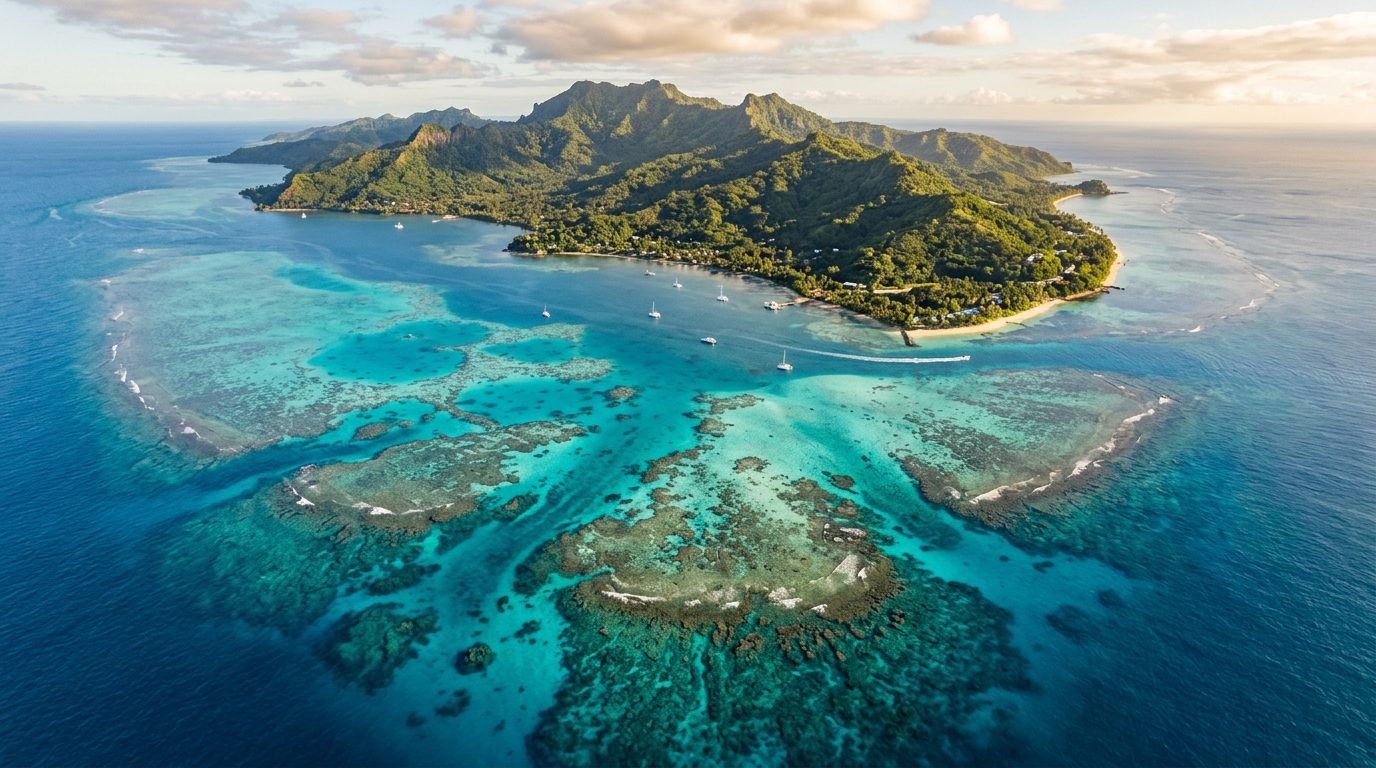
Beqa Lagoon sits south of Viti Levu, ringed by a barrier reef that drops into deep open ocean on its outer edge. The lagoon itself covers roughly 360 square kilometres, with Beqa Island in the centre and a chain of smaller motus along the southern rim. The shark dive happens at a specific site called Shark Reef, a flat sand-and-coral plateau on the lagoon’s northern reef line.
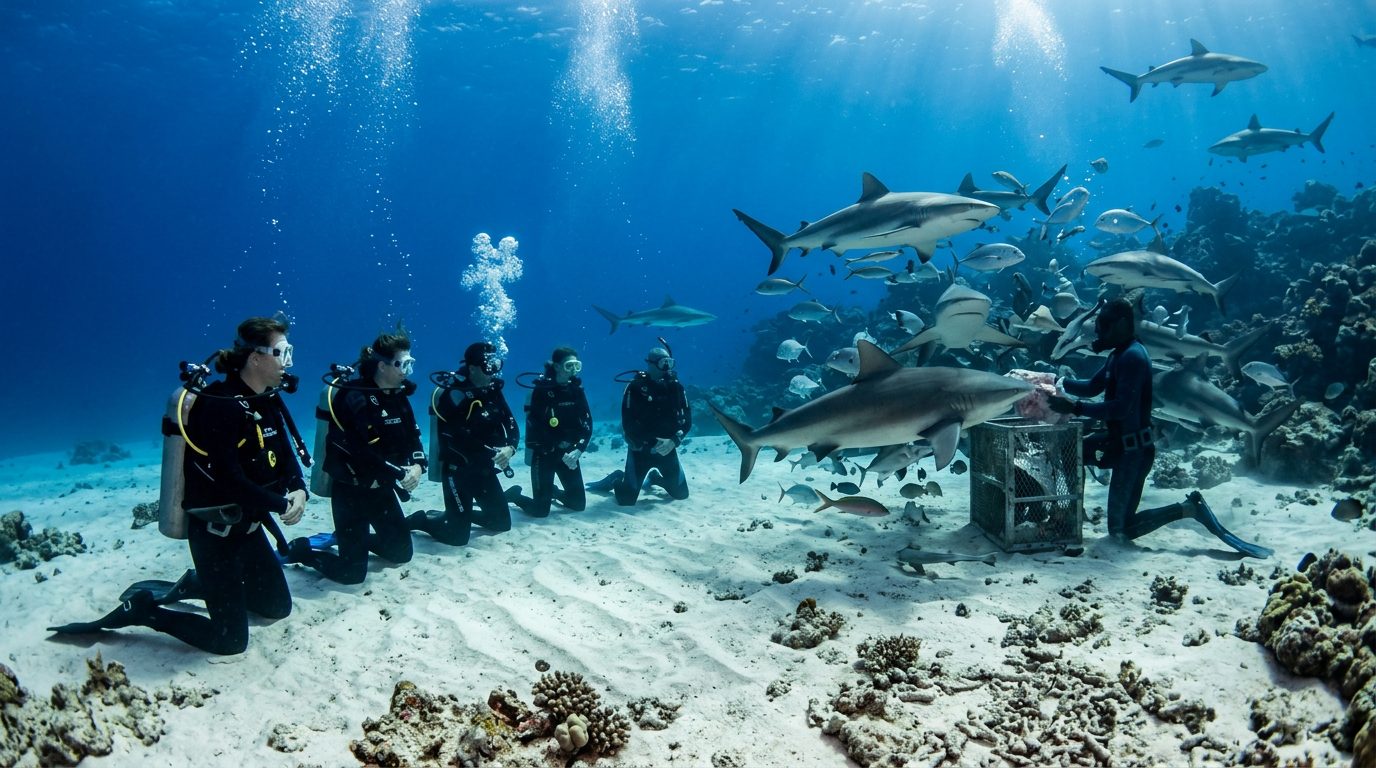
The feeding station is a deliberate setup. A low steel and concrete barrier sits on the sand at 18 to 20 metres depth, with divers positioned in a single row on the far side. Operator staff bring a sealed bin of frozen fish heads down on each dive and feed selected sharks by hand through the barrier, while a second guide watches the broader water column for the larger pelagic species.
For broader Fiji-diving context across regions and operators, see our scuba diving in Fiji guide.
The eight shark species
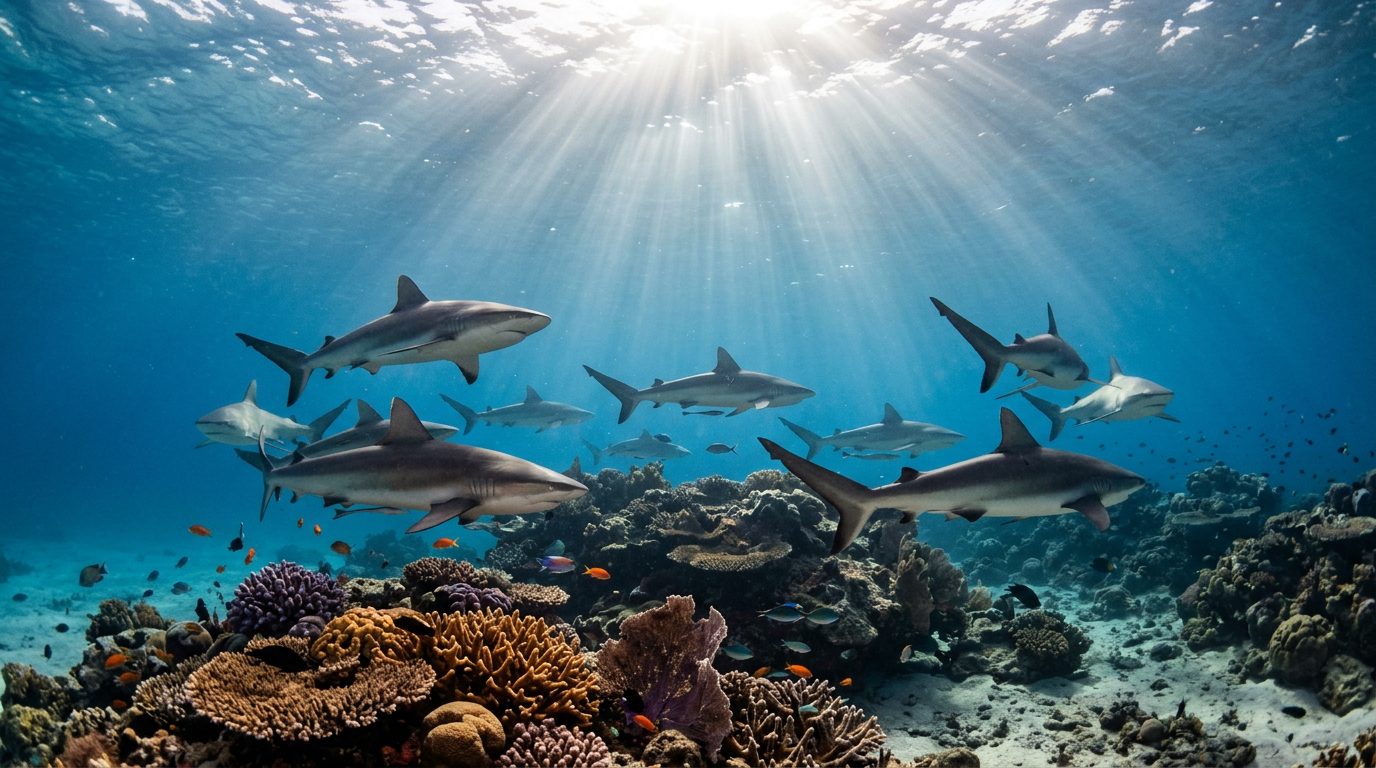
The species mix is what makes this dive uncommon. Most “shark dives” elsewhere in the world deliver one or two reef species; Beqa reliably delivers eight, with bull and tiger sharks as the headline acts.
| Species | Typical size | How often you see them |
|---|---|---|
| Bull shark | 2–3.5 m | Every dive, often 20+ individuals |
| Tiger shark | 3–4.5 m | Seasonal, most common Nov–Apr |
| Sicklefin lemon shark | 2.5–3 m | Most dives, 1–4 individuals |
| Grey reef shark | 1.5–2 m | Common, in groups |
| Blacktip reef shark | 1–1.6 m | Common, throughout the dive |
| Whitetip reef shark | 1–1.6 m | Common, often resting on sand |
| Silvertip shark | 2–3 m | Occasional, more often on outer reef |
| Tawny nurse shark | 2–2.5 m | Occasional, bottom-dwelling |
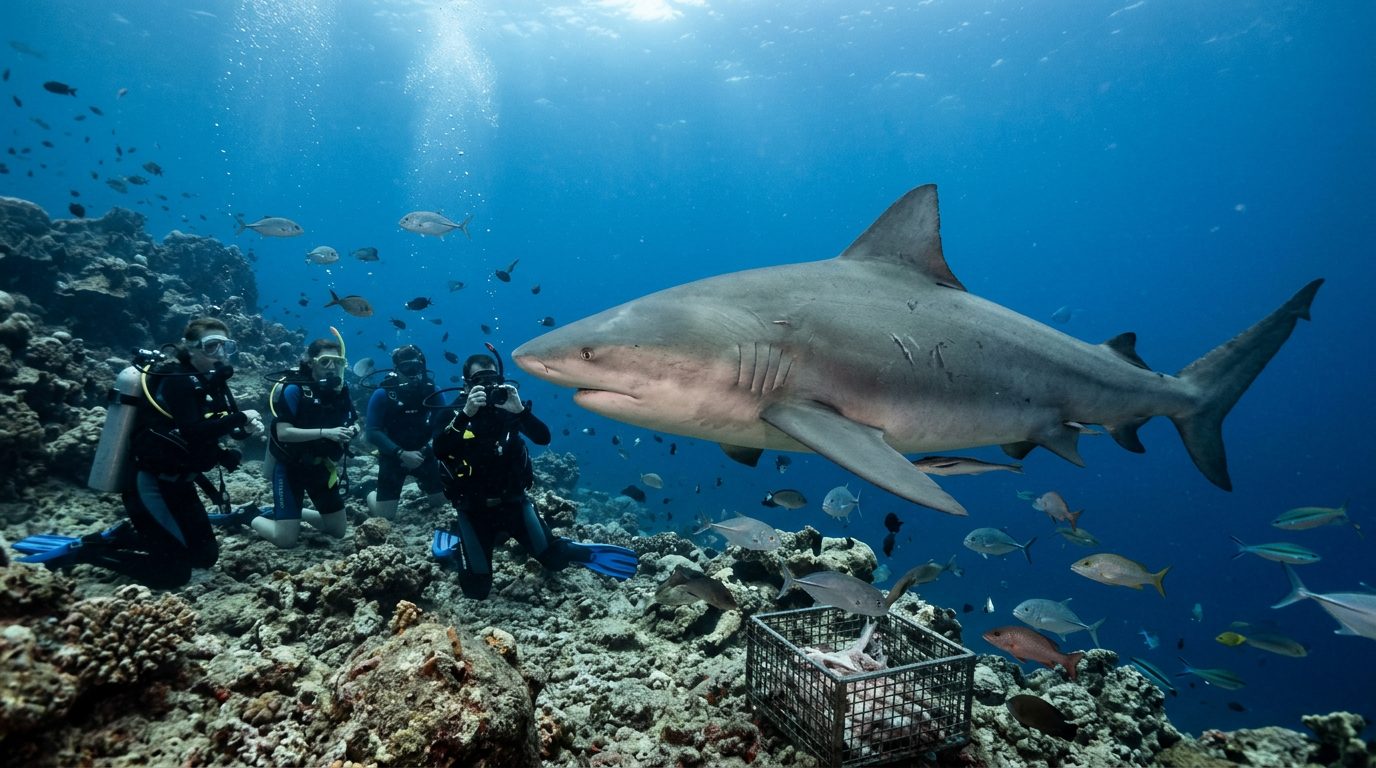
Bull sharks are the genuine highlight. The Shark Reef bull-shark population is one of the most-photographed in the world, and on a good dive day you can have ten or more circling the feeding station within touching distance of the barrier. Tiger sharks visit on a more seasonal schedule and tend to appear singly rather than in groups.
How a dive day actually runs
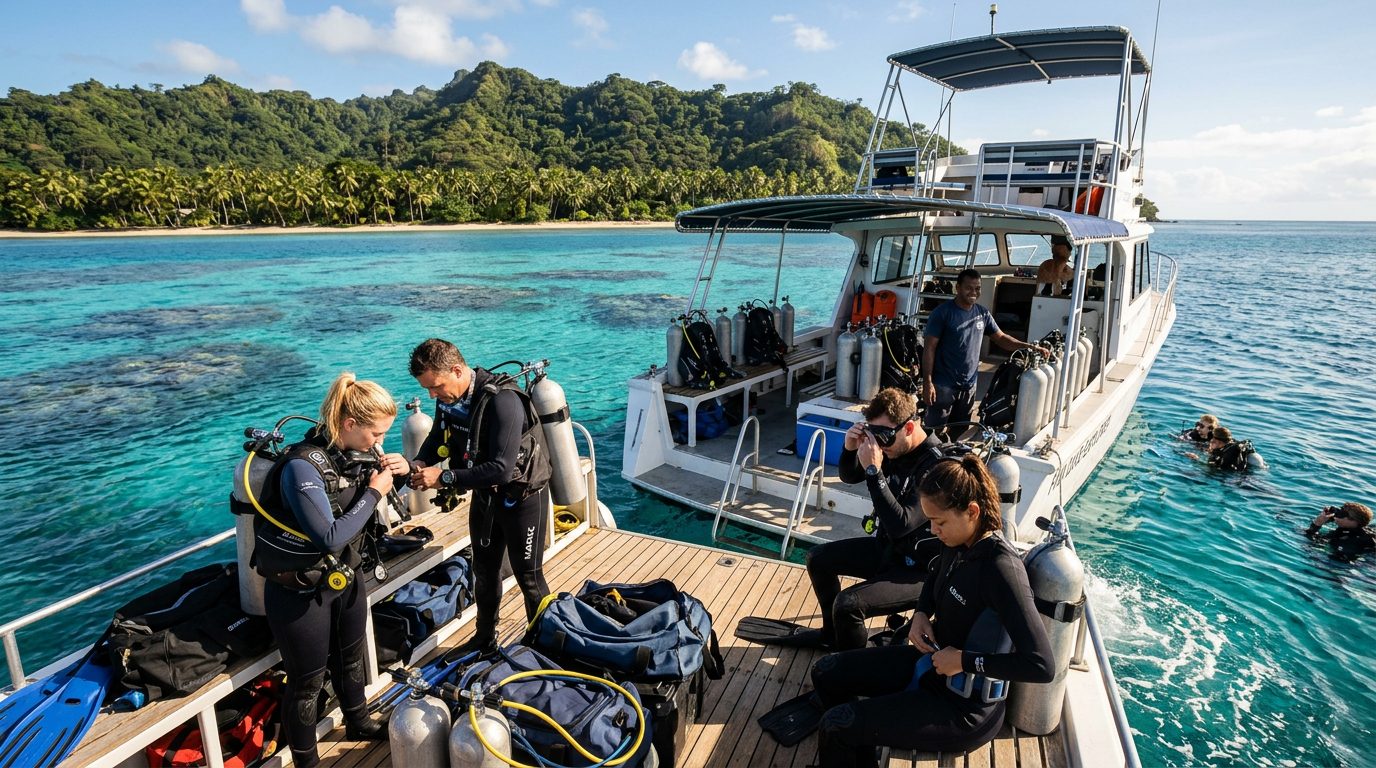
A typical Beqa shark-dive day with Beqa Adventure Divers starts at their Pacific Harbour base. Guests check in at 7:30 am, complete a safety briefing, and board the dive boat for the 30-minute run out to the reef. Two dives are run on most days: a first dive at the shark feeding station (around 9:00 am) and a second dive at a nearby reef site (around 11:00 am) after a surface interval.
The boat returns to Pacific Harbour by 1:30 pm. Lunch is not provided on most operator packages but the Pearl South Pacific resort restaurant is a five-minute walk from the dive shop and serves a strong post-dive plate.
The whole day is fast-paced. We have done this exactly twice and both times the shark dive was the morning highlight of a full week of Fiji diving. The second dive is usually a more relaxed reef site (Carpet Cove or Pinnacle), included specifically as a decompression buffer after the deeper feeding-station dive.
Booking the Dive: Operators and Cost
Beqa Adventure Divers (BAD)
Beqa Adventure Divers is the original Beqa shark-dive operator and runs the dive at Shark Reef Marine Reserve. Founded in 2003 by Mike Neumann and the Cumberland family, the company has been the conservation backbone of the dive site and helped establish the surrounding marine reserve as Fiji’s first National Marine Park.
Two-tank shark dive day: FJD 390 (approximately USD 175) including boat, weights, tanks, fills, and reserve fees. Gear rental adds FJD 60–80 per day. Bookings via the Beqa Adventure Divers website with at least one week’s notice in shoulder months and two weeks in peak.
BAD also runs the long-term shark-tagging research programme that has put individual ID on dozens of resident Beqa bull sharks. If you have the chance to listen to the post-dive briefing, the names and life histories of the regulars (Adi, Scarface, Madonna) make the experience meaningfully different from a generic shark dive elsewhere in the world.
Aqua-Trek Beqa
Aqua-Trek Beqa is the second major operator on the same reef system. Same general dive experience, similar pricing, slightly different operator philosophy. Aqua-Trek runs a separate feeding station a few hundred metres from the BAD site and has been operating since the 1990s.
Aqua-Trek’s typical two-dive package runs FJD 390–420 depending on whether transfers are bundled. Bookings via their website or through Pacific Harbour resort concierges.
Between the two operators, BAD has the larger international following and the more developed conservation programme. Aqua-Trek is slightly less crowded and has a more old-school dive-shop atmosphere. The shark experience itself is comparable.
What’s included and what’s not
The standard two-tank shark-dive day at either operator includes:
- Return boat transfer from Pacific Harbour dive shop
- Two dives — Shark Reef feeding station + reef buffer dive
- Tanks, weights, weight belt
- Marine reserve user fee (FJD 25 per diver per day, goes directly to the reserve)
- Dive briefing and certified guide
Not included in most packages: gear rental (BCD, regulator, computer, fins, mask, wetsuit), dive insurance, lunch, accommodation, transfers from Nadi or the Coral Coast.
For a full Pacific Harbour and Coral Coast trip-planning context, see our Coral Coast guide.
Certification, Experience and Safety
What level of diver you need to be
Both Beqa operators officially accept Open Water certified divers with logged experience. In practice, the dive sits at 18–20 metres with mild current and the genuine demand on a diver is not depth or skill but composure. You sit on the sand. You stay behind the barrier. You watch.
Our practical recommendation: be comfortable at 18 metres in open ocean, have at least 20 logged dives, and have done at least one shark encounter elsewhere (Maldives reef sharks, Caribbean nurse sharks, Galapagos hammerheads). Diver panic is the single biggest risk on this dive, and the easiest way to avoid it is prior exposure.
Advanced Open Water is recommended rather than required. The operators will accept Open Water divers but ask honest questions about your recent dive history during the morning briefing. Nitrox is offered on most days for an additional FJD 40 per tank and is worth the bottom-time extension.
The safety record honestly
The honest version: feeding-station shark dives are inherently higher-risk than reef diving, and Beqa is no exception. Both major Fiji operators have professional safety records spanning more than 20 years of daily operations, and the dive is generally regarded as well-run in the international dive community.
A small number of incidents have been reported in the broader Beqa shark-dive history over the past decade. The standard advice from the dive-medical community applies: dive within your training, communicate any anxiety to the divemaster before descending, do not touch the sharks under any circumstance, do not leave the line of divers behind the barrier, and surface with the group on the agreed signal.
The DAN (Divers Alert Network) emergency hotline is included on every operator briefing card. Carry your dive insurance details. The Pacific Harbour Hospital and the recompression chambers in Suva (90 minutes by road) are the closest emergency resources.
What to do if you’re nervous
Most first-time shark divers are nervous, and the operators expect it. The honest fix: book a reef dive day or two beforehand with the same operator. BAD and Aqua-Trek both run more conventional reef dives in the Beqa Lagoon area (Carpet Cove, Pinnacle, Side Streets) on alternate days, and even a single warm-up dive with the same boat crew dramatically reduces day-of nerves.
If you remain anxious after the morning briefing, both operators will allow you to defer to a different dive day at no charge. Diving the shark feeding station while panicking is more dangerous than skipping it.
For non-divers in your group, the boat does not offer snorkel access to the shark site (the feeding setup is too deep for safe surface snorkel). Plan accommodation in Pacific Harbour and use the day for a Navua River rafting trip or a Coral Coast day.
The Conservation Story
Shark Reef Marine Reserve
The Shark Reef Marine Reserve was established in 2014 as Fiji’s first National Marine Park. The reserve covers roughly 800 hectares around the shark-dive feeding station and is co-managed by Beqa Adventure Divers, the Fijian government, and the surrounding villages of Galoa and Wainiyabia.
A user fee of FJD 25 per diver per day is paid into the reserve fund, which compensates the participating villages for lost fishing access. This community-based marine-protected-area model is unusual in the South Pacific and has been studied by marine biologists as a template for other shark-dive conservation projects.
The result on the water is visible: shark population at the site has been stable for more than a decade, and the resident bull sharks have measurable site fidelity. Several individual sharks have been tagged for more than ten years and return to the same feeding location.
The bait debate
Shark feeding is a debated practice. The argument against: conditioning wild sharks to associate humans with food can change behaviour and increase risk in non-feeding encounters elsewhere. The argument for: managed feeding-station dives generate sustained revenue that funds local marine protection, and the social value of human-shark contact in changing public perceptions about sharks is hard to overstate.
Beqa Adventure Divers has published its position on this debate at length and is one of the more rigorous documenter of feeding behaviour and post-feed shark dispersal. The data, broadly, suggests Shark Reef sharks have stable territories and do not generalise the feeding behaviour to humans elsewhere in the lagoon.
This article does not take a position on the debate. We have done the dive twice, find it extraordinary, and continue to support the conservation model. Travellers should make their own call.
What your dive fee actually funds
Of the FJD 390 dive fee, roughly FJD 25 per diver per day flows to the reserve fund and the partnered villages. The balance covers operating costs (boat fuel, staff wages, gear maintenance, insurance). The conservation funding model is real but modest in absolute terms — the dive is a sustainable business rather than a charity.
For travellers interested in additional support, BAD’s Projects AWARE and Shark Foundation partnerships accept direct donations through their main website. A USD 50 donation funds approximately one month of tag-monitoring for a single tagged shark.
How to Plan a Beqa Shark Dive Trip
Where to stay
The two main accommodation options for divers are Pacific Harbour (mainland Viti Levu, 10 minutes from the dive shops) or Beqa Island itself (a 30-minute boat ride from Pacific Harbour). The mainland option is more flexible and cheaper; the island option puts you closer to the dive sites and adds extra reef-dive variety.
- Pearl South Pacific Resort (Pacific Harbour) — 80 rooms, FJD 720+, the area’s flagship resort and a 5-minute walk from BAD
- Uprising Beach Resort (Pacific Harbour) — dorms FJD 95, private rooms FJD 240+, dive-friendly backpacker option
- Beqa Lagoon Resort (Beqa Island) — 25 bures, FJD 950+ per night, dive packages bundle accommodation + shark dives
- Royal Davui Island Resort (Beqa Lagoon) — adults-only luxury, 16 villas, FJD 2,200+, runs both shark dives and reef dives
For the wider Fiji resorts picture, see our Fiji resorts pillar.
When to dive
Bull sharks are present year-round, so the shark dive runs every month. Tiger sharks are seasonal — most reliably present November through April, which is technically Fiji’s wet season. The trade-off: better tiger-shark sightings vs slightly higher chance of weather cancellations.
For the best balance of weather and shark variety, our recommendation is late April or early May — end of the wet season, tiger sharks still occasionally present, water visibility recovering, and prices in the lower band.
The dry-season window (June–October) gives the most reliable boat days but tiger sharks are less common. Most travellers find this is the right trade-off if the trip is locked to school holidays.
For full month-by-month detail on Fiji’s weather and diving seasons, see our best time to visit Fiji guide.
Getting to Pacific Harbour
Pacific Harbour sits 147 km southeast of Nadi airport, a 2 hour 30 minute drive on the Queens Road. Most divers fly into Nadi, taxi or self-drive to Pacific Harbour, stay 2–3 nights, and dive across that window.
A direct taxi from Nadi airport to Pacific Harbour runs FJD 230. A rental car (FJD 80+/day from the airport) is more flexible if you plan to add a Coral Coast day either side of the dive.
From Suva, Pacific Harbour is 50 km west on the Queens Road, about 60 minutes drive. Suva-based travellers can do the dive as a long day trip.
Frequently Asked Questions
How dangerous is the Beqa Lagoon shark dive?
Both major Fiji shark-dive operators have professional safety records spanning more than two decades of daily operations. The dive is inherently higher-risk than reef diving — bull and tiger sharks are large predators — but the structured feeding-station setup, the steel barrier, and the experienced guide team make it safer than free-swimming pelagic shark encounters. Follow the briefing and stay in the line of divers.
What sharks can you see at Beqa Lagoon?
Eight species are reliably encountered: bull, tiger, sicklefin lemon, grey reef, blacktip reef, whitetip reef, silvertip and tawny nurse. Bull sharks are present on every dive in good numbers; tiger sharks are seasonal and most common November to April.
How much does the Beqa shark dive cost?
Approximately FJD 390 (USD 175) for a two-tank dive day with either Beqa Adventure Divers or Aqua-Trek Beqa. The price includes boat, tanks, weights, marine reserve fees and a certified guide. Gear rental adds FJD 60–80 per day.
Do you need to be an advanced diver for the Beqa shark dive?
Open Water is the official minimum but Advanced Open Water is strongly recommended for the depth (18–20 m). Both operators ask honest questions about your recent experience during the morning briefing. At least 20 logged dives and one prior shark encounter elsewhere is our practical recommendation.
How deep is the Beqa shark dive?
The feeding station sits at 18 to 20 metres on a flat sand bottom. The dive profile keeps divers at that depth for most of the bottom time, with a slow ascent up the reef wall on return. Nitrox is offered and recommended for the extra bottom time.
Is the Beqa shark dive ethical?
Shark feeding is debated in the dive community. The Beqa operators argue the dive funds Fiji’s first National Marine Park and supports shark population research; opponents argue conditioning wild sharks to humans is risky in principle. The published data suggests Shark Reef sharks have stable territories and do not generalise the feeding behaviour. We support the conservation model but encourage travellers to make their own call.
Can non-divers see the Beqa sharks?
The feeding station is too deep for safe surface snorkel and the operators do not run snorkel access to the site. Non-divers in your group can stay at Pacific Harbour and combine the day with Navua River rafting, Pacific Harbour ziplining or a Coral Coast day trip.
About the author: Lucy Cameron is the founder of Hideaway Fiji. NAUI Advanced Open Water + PADI Nitrox. Beqa Lagoon shark dives logged: 2 with Beqa Adventure Divers. Reef dives logged at Rainbow Reef (Taveuni), Manta Channel (Yasawas), Astrolabe (Kadavu), and the Mamanuca outer sites. Facts in this article verified via the Beqa Adventure Divers operator site, Aqua-Trek Beqa, and a 17 May 2026 spot-check across multiple operator-published references.