Written by Lucy Cameron
Fiji food and culture is the part of the country most resort travellers miss. Spend a week at one Mamanuca resort and you’ll meet kava only as a “tourist ceremony”; spend a few hours in a Nadi or Suva market and the country opens up. Here is a working primer after 15 trips.
Key Takeaways
- Fiji’s food is half iTaukei (indigenous) and half Indo-Fijian — the 40% population descended from indentured workers brought in the 1870s.
- Must-try dishes: lovo (earth-oven feast), kokoda (coconut-cured fish), roti, kava.
- Bula = hello. Vinaka = thank you. Two phrases that go a long way.
- Village visits and resort lovo nights are both worthwhile — for different reasons.

Traditional Fijian Food
Lovo — the earth-oven feast
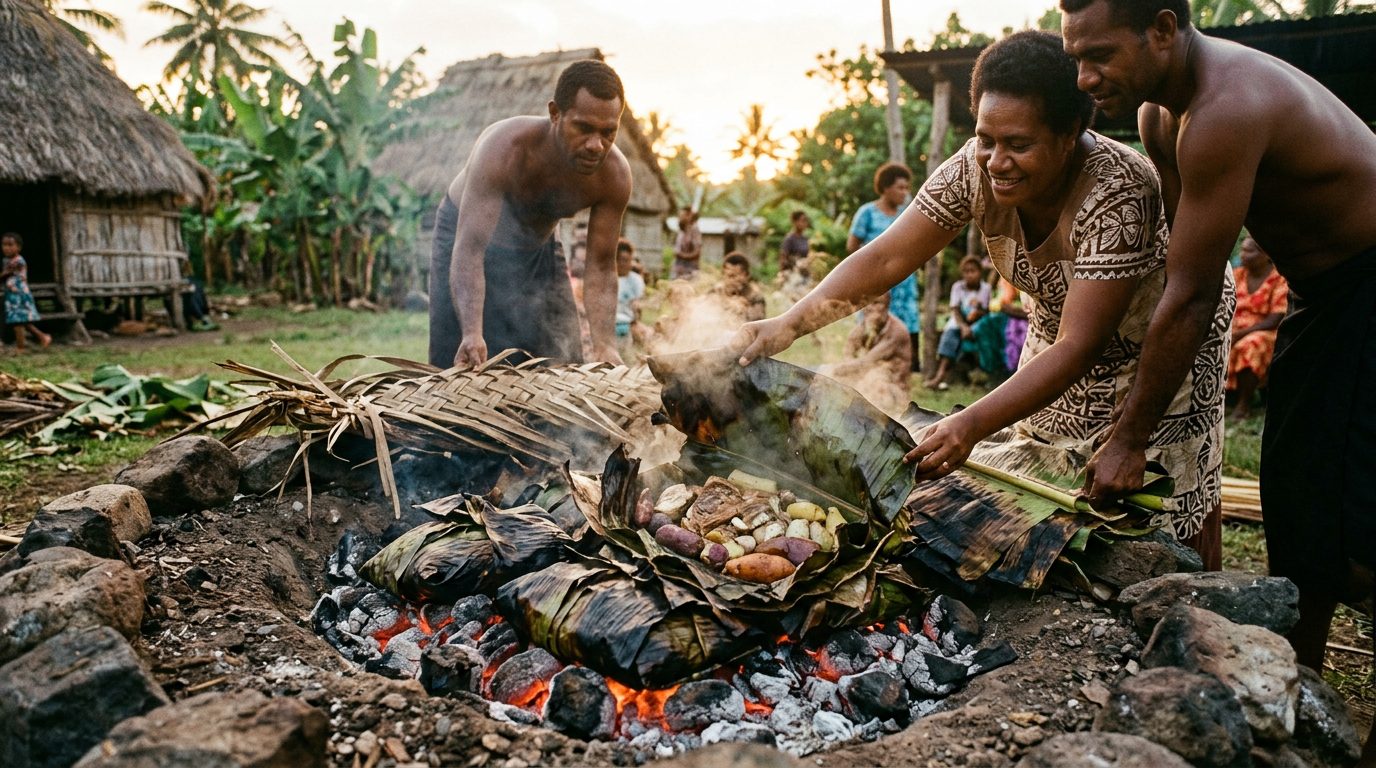
A lovo is the country’s signature traditional cooking method — meat, fish, root vegetables and chicken wrapped in banana leaves, then slow-cooked over hot stones in a sealed earth pit. Open the pit and you get a sweet smoky aroma you don’t get anywhere else.
Most outer-island resorts run a weekly lovo night. The early seating is the better one — that’s when the host families do the cooking demonstration, lift the stones and unwrap the food in front of guests.
For the authentic version, a village visit will usually include a lovo with the host family. Resort versions are perfectly fine but inevitably scaled up.
Kokoda and seafood
Kokoda (pronounced ko-KON-da) is Fiji’s ceviche — raw fish (usually mahi-mahi or wahoo) cured in lime juice, coconut milk, chillies, onions and capsicum. Served cold, eaten as a starter or light lunch. Excellent at almost every Coral Coast resort and at most Mamanuca lunches.
Grilled walu (Spanish mackerel), reef fish with cassava chips, and coconut-milk fish curries are the other staples. Most resort menus offer at least two of these every night.
The Suva Municipal Market (Saturdays especially) is the country’s best place to see the seafood ecosystem at work — reef fish, octopus, sea grapes (a delicacy), kelp.
Root vegetables and everyday staples
Cassava, dalo (taro), kumala (sweet potato) and breadfruit are the everyday Fijian carbs. They appear at every lovo, every village meal, every village-themed resort buffet. Cassava is the easiest entry point — it has a mild, slightly nutty flavour and pairs well with anything spicy.
Coconut shows up in almost everything — fresh coconut milk in fish curries, coconut cream over root vegetables, fresh coconut as a snack. Pick up a fresh-cut bilo at the Natadola stalls for FJD 3–4.
Tropical fruit is exceptional — papaya, mango, pineapple, passion fruit, dragon fruit, and the local “five corner” star fruit are all in season at different points across the year.
Indo-Fijian Cuisine
The history that explains the food
In the 1870s the British colonial administration brought over 60,000 indentured workers from India — primarily Bihar and Uttar Pradesh — to work the Fijian sugar plantations. Most stayed. Their descendants make up about 40% of Fiji’s population today.
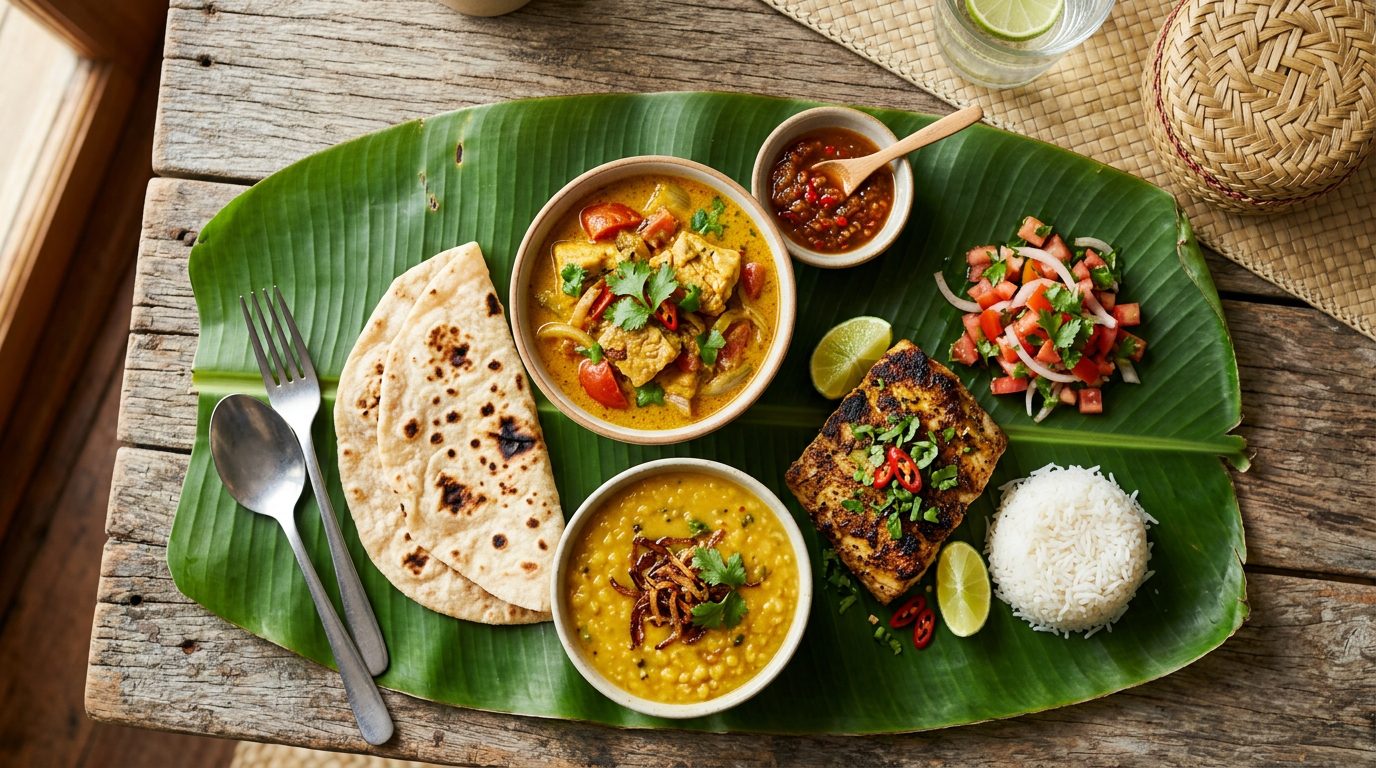
The food they brought is now thoroughly Fijian. Roti shops are on every Nadi street; lamb and goat curries are standard at most Suva eateries. Indo-Fijian cuisine is generally sharper, hotter and spicier than the cooler iTaukei food — and a worthwhile counterpoint after a few days of resort buffet.
For broader cultural context, see our things to do in Nadi guide for Indo-Fijian restaurant recommendations.
Dishes to try
- Roti and dhal — soft Indian flatbread with lentil soup, FJD 6–10 at any roti shop. Best lunch in the country for the price
- Curry goat or lamb — slow-cooked with cumin, cardamom, chilli. The standard Indo-Fijian Sunday meal
- Vegetable samosas — fried pastry parcels with spiced potato and pea filling, FJD 2–3 each at any market stall
- Channa (chickpea) curry — staple vegetarian option, available at almost every Indo-Fijian eatery
- Pulao rice — fragrant rice cooked with whole spices, often with peas, cashews and dried fruit
Where to eat
Nadi’s main street has 8–10 unnamed roti shops — wander in, point at what looks good, FJD 6–12 will feed you generously. Saffron Indian Restaurant (Nadi town) is the sit-down option for slightly more polished meals. Daikoku in Nadi serves Japanese teppanyaki if you want a break from curry.
Suva has the country’s deepest Indo-Fijian restaurant scene — Maya Dhaba on Laucala Bay Road and the cluster of family-run roti shops around Cumming Street are the standouts.
Indigo Indian at Port Denarau is the resort-area pick — fancier presentation, FJD 18–32 mains.
Cultural Norms and Etiquette
The kava ceremony
Kava (yaqona in Fijian) is the national drink — a mild root infusion served in coconut-shell bilos from a communal wooden tanoa. The taste is earthy, the lip-tingle is unfamiliar, the cultural weight is enormous.
The protocol: clap once before receiving the bilo, drink it in one go, clap three times and say “maca” (it is empty). Two or three bilos is plenty for a first try.
For a deeper kava primer, see our kava drink guide.
Visiting a village
A formal village visit is the most rewarding cultural half-day in the country. Wear a sulu (sarong) over knees and shoulders, take off your hat (only the chief wears a hat in a village), and bring a half-kilo of yaqona root (FJD 30–40 at Nadi market) as a sevusevu — the customary gift presented to the headman.
The resort almost always handles the sevusevu logistics. Don’t try to organise a village visit unprompted — village protocol requires advance notice and a host introduction.
Standard village tour cost: FJD 50–80 per person on top of any resort transfer. The fee is shared between the host family and the village fund.
Resort cultural nights and Fijian language
The weekly resort lovo + meke night is genuinely worthwhile. Meke is the traditional song-and-dance form — the lali drum, harmonised Fijian singing, and dancers in tapa-cloth costumes. Brief but excellent.
Useful Fijian phrases: Bula (hello), Vinaka (thank you), Sota Tale (see you again), Yaqona (kava), Sulu (sarong). English is spoken everywhere in tourism, so these are courtesy phrases rather than necessities — but they land warmly.
For more cultural-village context, see our cultural villages guide.
Frequently Asked Questions
What is the national dish of Fiji?
Kokoda (coconut-cured raw fish) and lovo (earth-oven feast) are the two strongest contenders. Most Fijians would name kokoda; resort menus usually feature both.
Is Fijian food spicy?
Indigenous (iTaukei) Fijian food is mild — coconut, fish, root vegetables. Indo-Fijian food is genuinely spicy — curries, chillies, pickles. The country offers both; your resort buffet will have mild options across the board.
Can vegetarians eat well in Fiji?
Yes — the Indo-Fijian tradition includes a full vegetarian repertoire (dhal, channa, vegetable curries, samosas). Resort menus typically include 2–3 vegetarian mains. Vegan diners face slightly more friction; ask in advance.
What is kava in Fiji?
Kava (yaqona) is a mildly sedating root infusion that serves as Fiji’s national drink and a central cultural element. Served in coconut-shell bilos from a communal tanoa bowl. Earthy taste, lip-tingle effect. See our kava guide.
What is a lovo?
A lovo is Fiji’s traditional underground earth-oven feast — meat, fish, root vegetables and chicken wrapped in banana leaves and slow-cooked over hot stones in a sealed pit. Most outer-island resorts run a weekly lovo night.
Should I bring a gift to a Fijian village?
Yes — bring a half-kilo of yaqona (kava) root as a sevusevu gift to the headman. Around FJD 30–40 at any market. The resort will normally arrange this for you.
About the author: Lucy Cameron is the founder of Hideaway Fiji. Village visits: 7 across 15 trips. Favourite Fijian dish: kokoda with fresh coconut cream.